- Published on
- Veemi Accounting
Construction Company Accounting: Common Mistakes and How to Fix Them
Construction projects rarely follow a simple financial path. Unlike many businesses that complete transactions within days or weeks, construction companies often manage projects spanning months or even years while coordinating subcontractors, equipment, labor, materials, permits, and changing client requirements. This makes construction company accounting significantly more complex than traditional business accounting.
When accounting processes are inaccurate, the consequences can be severe. Contractors may experience cash flow shortages, inaccurate job profitability, delayed tax filings, compliance issues, and even project losses despite maintaining a busy workload. Without reliable financial reporting, making informed business decisions becomes increasingly difficult.
Why Construction Company Accounting Is Different from Standard Accounting
Traditional accounting focuses on tracking business-wide income and expenses. Construction accounting, however, revolves around individual projects, each operating almost like its own business.
Several factors make contractor accounting unique:
Project-Based Accounting
Every construction project has its own budget, timeline, labor costs, material purchases, subcontractor expenses, and profitability targets. Tracking everything under one general expense category makes it impossible to determine which projects generate profits.
Long-Term Contracts
Many projects continue for months or years. Revenue cannot always be recognized when cash is received. Instead, contractors often follow specific accounting standards depending on contract structure.
Many construction companies also work closely with real estate developers and property investors, making project-based financial tracking even more important. If your business is involved in development or investment projects, our guide on accounting for real estate investors explains the key financial records and reporting practices needed to manage property-related investments effectively.
Complex Payment Structures
Construction businesses commonly deal with:
👉 Progress billing
👉 Retainage
👉 Change orders
👉 Advance deposits
👉 Equipment rentals
👉 Material price fluctuations
These factors require specialized accounting systems that standard bookkeeping practices often cannot handle effectively.
Common Construction Company Accounting Mistakes to Avoid
Inaccurate Job Costing
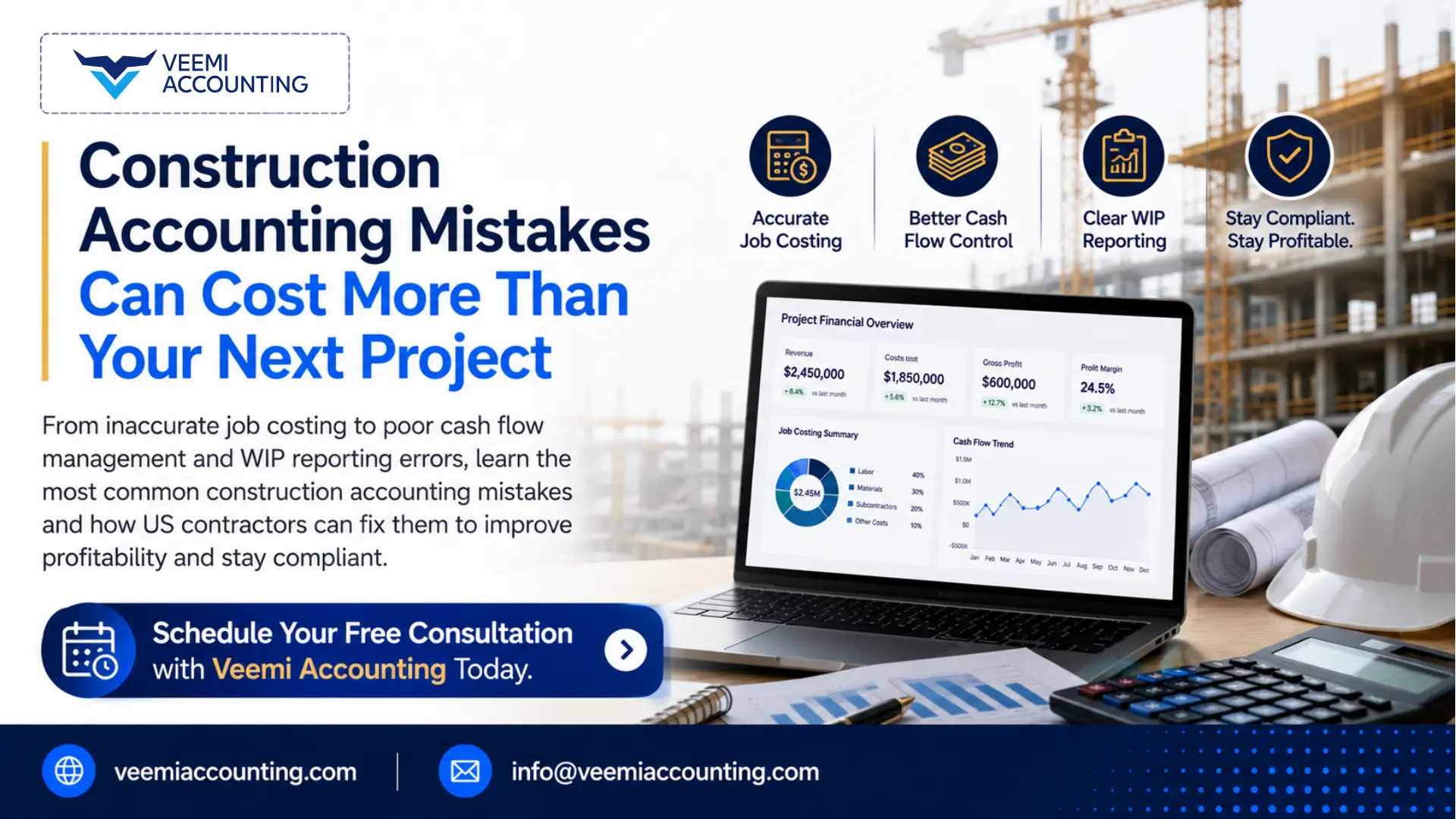
One of the biggest reasons construction companies lose money is poor job costing.
Many businesses know how much they spend overall but cannot accurately determine the actual cost of individual projects.
Common issues include:
👉 Tracking expenses only at the company level
👉 Mixing labor, materials, equipment, and subcontractor costs
👉 Missing indirect expenses
👉 Failing to update project budgets regularly
Why It Matters
Without accurate job costing:
👉 Profitable projects appear unprofitable
👉 Loss-making jobs remain unnoticed
👉 Future bids become inaccurate
👉 Budget overruns are discovered too late
How to Fix It
Implement a structured job costing system.
Best practices include:
👉 Assign a unique job code to every project.
👉 Create standardized cost codes for labor, materials, equipment, subcontractors, permits, and overhead.
👉 Record expenses daily instead of waiting until month-end.
👉 Compare actual costs against estimated budgets regularly.
Many contractors benefit from integrating tools such as QuickBooks Contractor Edition with construction management platforms like Procore to automate cost tracking.
2. Misapplying Revenue Recognition Methods
Revenue recognition is one of the most misunderstood areas of construction accounting.
Some contractors simply recognize revenue whenever they receive payment. Others delay recognizing revenue until the project finishes.
Neither approach is always correct.
Common methods include:
Cash Basis
Revenue is recognized when cash is received.
Suitable for:
👉 Smaller contractors
👉 Certain tax situations
Percentage-of-Completion Method
Revenue is recognized based on project completion.
Often used for:
👉 Large commercial projects
👉 Long-term contracts
Completed-Contract Method
Revenue is recognized after the project finishes.
Used in specific situations depending on tax rules and project characteristics.
Why It Matters
Using the wrong revenue recognition method can result in:
👉 Financial statement errors
👉 Tax reporting problems
👉 Compliance issues with US GAAP and ASC 606
👉 Misleading profit reporting
How to Fix It
Construction companies should:
👉 Choose the appropriate accounting method based on project size and duration.
👉 Apply the method consistently.
👉 Review contracts before determining revenue treatment.
👉 Work with accountants experienced in construction-specific accounting standards.
3. Poor Retainage Tracking
Retainage is common in construction contracts.
Clients often withhold a percentage (typically 5–10%) of payment until work is completed satisfactorily.
Unfortunately, many businesses record retainage incorrectly.
Common mistakes include:
👉 Treating retainage as regular accounts receivable
👉 Forgetting retainage balances entirely
👉 Failing to reconcile retained payments
Why It Matters
Improper retainage accounting creates:
👉 Unexpected cash shortages
👉 Incorrect receivable balances
👉 Confusing financial statements
How to Fix It
Construction companies should:
👉 Maintain separate retainage receivable and payable accounts.
👉 Reconcile retainage monthly.
👉 Track expected release dates.
👉 Include retainage in cash flow forecasts.
Proper tracking ensures outstanding balances are collected promptly.
4. Weak Cash Flow Management
Many profitable contractors fail because of poor cash flow—not lack of revenue.
Construction companies often pay for:
👉 Materials
👉 Equipment
👉 Payroll
👉 Insurance
👉 Permits
weeks or months before receiving client payments.
Seasonal slowdowns can worsen the situation.
Warning Signs
👉 Delayed payroll
👉 Difficulty paying suppliers
👉 Frequent emergency borrowing
👉 Constantly chasing overdue invoices
How to Fix It
Improve cash flow by:
Build Cash Flow Forecasts
Forecast expected inflows and outflows at least 90 days ahead.
Use Progress Billing
Invoice clients as project milestones are completed rather than waiting until the project ends.
Monitor Accounts Receivable
Follow up immediately on overdue invoices.
Maintain Working Capital
Establish a business line of credit before cash shortages occur.
Healthy cash flow allows projects to continue without costly interruptions.
5. Misclassifying Workers (Employees vs. Subcontractors)
Construction companies frequently hire both employees and independent subcontractors.
Improper worker classification can trigger serious IRS and state penalties.
Common mistakes include:
👉 Treating employees as independent contractors
👉 Missing payroll tax obligations
👉 Failing to issue Form 1099-NEC
Potential Consequences
Misclassification may lead to:
👉 Payroll tax assessments
👉 Interest and penalties
👉 Worker compensation issues
👉 Labor law violations
How to Fix It
Review every worker relationship carefully.
Best practices include:
👉 Follow IRS worker classification guidelines.
👉 Maintain signed subcontractor agreements.
👉 Collect Form W-9 before work begins.
👉 File Form 1099-NEC on time.
👉 Conduct periodic compliance reviews.
6. Overhead Allocation Errors
Many contractors underestimate project costs because they fail to allocate indirect expenses properly.
Indirect costs include:
👉 Equipment depreciation
👉 Office rent
👉 Insurance
👉 Administrative salaries
👉 Software subscriptions
👉 Vehicle expenses
Ignoring these costs often results in bids that are too low.
Why It Matters
Without proper overhead allocation:
👉 Job profitability appears inflated.
👉 Future bids become inaccurate.
👉 Companies unknowingly lose money.
How to Fix It
Develop a consistent overhead allocation formula.
Common allocation methods include:
👉 Labor hours
👉 Direct labor costs
👉 Equipment hours
👉 Total direct project costs
Review allocation rates periodically to reflect changing business expenses.
7. DIY Bookkeeping Without Industry Expertise
Many contractors attempt to save money by handling bookkeeping internally or hiring general bookkeepers unfamiliar with construction accounting.
While this may work during early growth stages, complexity increases quickly as projects expand.
Construction accounting requires expertise in:
👉 Job costing
👉 WIP reporting
👉 Progress billing
👉 Retainage
👉 Payroll compliance
👉 Multi-state tax rules
👉 Equipment depreciation
👉 Revenue recognition
Generic bookkeeping often overlooks these specialized requirements.
How to Fix It
Partner with professionals who understand contractor accounting.
Industry specialists can:
👉 Maintain accurate books
👉 Improve project profitability
👉 Ensure tax compliance
👉 Deliver management reports
👉 Support business growth
While accurate bookkeeping is essential, growing construction companies also need job costing, WIP reporting, cash flow forecasting, and financial analysis to make informed business decisions. Learn why bookkeeping alone is not enough for business growth and how strategic accounting helps businesses improve profitability and scale with confidence.
Build a More Profitable Future with Smarter Construction Accounting
Strong financial management is the foundation of every successful construction business. By improving job costing, tracking retainage accurately, managing cash flow proactively, generating regular WIP reports, and following the right accounting standards, your company can reduce financial risks and make more informed business decisions. Investing in specialized construction accounting practices not only improves project profitability but also positions your business for sustainable, long-term growth.
Whether you’re managing residential builds, commercial projects, or multiple job sites across the USA, having the right accounting partner can make all the difference.
Schedule a Free Consultation
Ready to eliminate accounting mistakes and gain better control over your construction company’s finances?
Schedule a free 30-minute consultation with Veemi Accounting to discover how our construction accounting experts can help you streamline bookkeeping, improve job costing, strengthen cash flow, maintain compliance, and maximize project profitability.
FAQs
Construction companies should update job costing reports at least weekly, and ideally in real time as expenses are incurred. Regular updates help project managers identify budget overruns early, monitor labor productivity, and make informed decisions before small issues become costly financial problems.
A job costing report focuses on the actual costs incurred for a specific project, including labor, materials, equipment, and subcontractor expenses. A Work-in-Progress (WIP) report provides a broader financial overview by comparing project costs, revenue recognized, billings, and completion percentages to identify over-billed or under-billed projects.
Retainage can significantly impact a contractor’s cash flow because a portion of each payment is withheld until project milestones or completion are met. Properly tracking retainage allows construction companies to forecast future cash inflows accurately, avoid liquidity issues, and ensure retained funds are collected promptly once contractual conditions are satisfied.
In addition to standard financial statements like the Profit & Loss Statement and Balance Sheet, construction business owners should review monthly job costing reports, Work-in-Progress (WIP) schedules, cash flow forecasts, accounts receivable aging reports, and project profitability reports. These reports provide better visibility into project performance and overall financial health.
Yes. Cloud-based construction accounting software enables real-time tracking of project expenses, labor costs, change orders, and invoices across multiple job sites. When integrated with project management tools, it improves financial visibility, supports more accurate bidding, reduces manual errors, and helps contractors make faster, data-driven decisions that improve overall profitability.