- Published on
- Veemi Accounting
Cash Flow Planning Before June 30: An Australian SME Guide
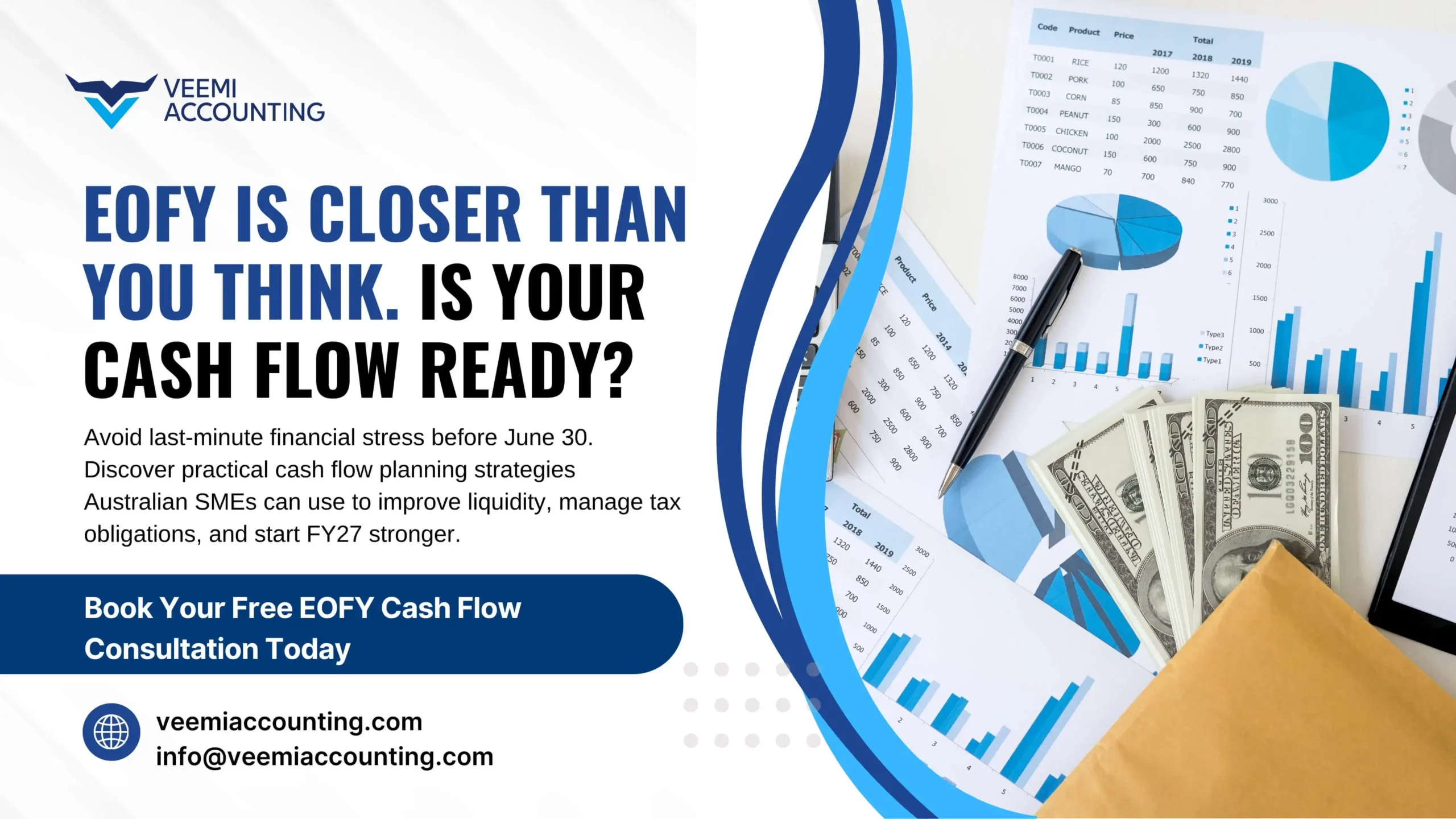
For many business owners, June arrives with a familiar sense of pressure. Unpaid invoices are still sitting in the system, BAS obligations are approaching, payroll and super payments are due, and there is uncertainty around how much cash is actually available heading into the new financial year. This is exactly why cash flow planning before EOFY Australia becomes so critical for small and medium businesses.
Poor cash flow management remains one of the leading causes of business distress in Australia. According to ASIC data referenced by industry reports, nearly half of failed SMEs identify cash flow issues as a major factor behind insolvency. EOFY is not just a compliance exercise; it is one of the best opportunities to regain visibility, improve liquidity, and prepare for sustainable growth in FY27.
This guide breaks down the key EOFY cash flow strategies Australian SMEs should focus on before June 30, including forecasting, tax timing, receivables management, ATO deadlines, and planning opportunities that can strengthen your financial position for the year ahead.
Why June 30 Is a Cash Flow Turning Point for SMEs?
The Australian financial year runs from 1 July to 30 June, and that timeline shapes how businesses manage tax, reporting, and financial strategy throughout the year. EOFY creates a unique concentration of obligations that can quickly place pressure on cash reserves if businesses are unprepared.
Around June 30, SMEs are often dealing with multiple financial commitments simultaneously, including:
👉BAS lodgements
👉PAYG withholding obligations
👉Payroll reconciliation
👉Tax return preparation
👉Stocktake and year-end reporting
At the same time, many businesses experience seasonal fluctuations in revenue or delayed customer payments, which can tighten liquidity exactly when expenses increase.
Timing also matters because many tax concessions, deductions, and support measures have strict EOFY cut-off dates. Missing a deadline can mean missing a deduction, delaying a refund, or creating unnecessary ATO complications.
Rather than viewing EOFY purely as an accounting deadline, smart business owners treat it as a strategic checkpoint, an opportunity to assess performance, improve systems, and strengthen cash flow before the new financial year begins.
Start With a Cash Flow Forecast
One of the most effective ways to improve EOFY cash flow is to create a realistic cash flow forecast.
Using cloud-based platforms can make EOFY cash flow forecasting significantly easier. If you are evaluating software options, read our guide on Xero vs QuickBooks vs MYOB: Best Accounting Software for Australian SMEs in 2026 to understand which platform best fits your business needs.
For Australian SMEs, a rolling 13-week cash flow forecast is often the most practical approach. This forecasting method gives business owners visibility over short-term liquidity while still capturing upcoming tax obligations, payroll cycles, supplier payments, and seasonal fluctuations.
A good forecast should include:
Expected Cash Inflows
👉 Customer payments
👉 Sales revenue
👉 Financing or grants
👉 GST refunds
Expected Cash Outflows
👉 Payroll and wages
👉 Rent and utilities
👉 BAS and PAYG obligations
👉 Superannuation contributions
👉 Supplier invoices
Time Your Income and Expenses Strategically
One of the most overlooked aspects of EOFY cash management is the timing of income and expenses.
Strategic EOFY decisions should always align with your long-term tax position. If you are unsure whether your current approach is costing you money, read Are You Overpaying Taxes? Signs Your Business Needs Better Tax Planning for practical insights.
Deferring Income
Where appropriate and commercially practical, some SMEs may choose to delay invoicing certain work until after July 1. Doing so may shift taxable income into the next financial year while also helping balance revenue across periods.
This approach is especially relevant for businesses close to higher tax thresholds or businesses expecting fluctuating income between FY26 and FY27.
Bringing Forward Deductible Expenses
Businesses may also choose to prepay or accelerate deductible expenses before June 30, including:
👉 Office supplies
👉 Software subscriptions
👉 Marketing expenses
👉 Equipment purchases
👉 Insurance premiums
Bringing forward deductions can lower taxable income for the current year and improve the near-term tax position.
However, cash flow planning should always take priority over tax minimisation alone. Aggressively spending cash purely for deductions can create liquidity pressure if not carefully planned.
The goal is balance: maintaining healthy working capital while making smart EOFY tax decisions.
For best results, businesses should coordinate closely with their accountant or tax adviser before implementing timing strategies.
Leverage the Instant Asset Write-Off (Where Applicable)
The instant asset write-off remains one of the most valuable EOFY tax planning tools available to eligible Australian SMEs.
Under current rules, eligible businesses with turnover under the applicable threshold may be able to immediately deduct the cost of eligible assets below the specified limit, provided the asset is installed and ready for use before June 30.
This can include purchases such as:
👉 Computers and laptops
👉 Office equipment
👉 Machinery and tools
👉 Technology upgrades
The key detail many businesses overlook is that eligibility depends on the asset being installed and ready for use, not simply purchased before EOFY.
That means waiting until the last week of June can create problems if supply delays or installation issues occur.
From a cash flow perspective, the instant asset write-off can improve short-term tax outcomes by accelerating deductions into the current financial year. Businesses considering major purchases should evaluate:
👉Whether the asset genuinely supports operational growth
👉Available cash reserves
👉Financing costs
👉Impact on FY27 budgeting
Because thresholds and eligibility rules can change between financial years, SMEs should review the latest ATO guidance before making decisions.
Get on Top of Receivables Before June 30
Late payments remain one of the biggest cash flow challenges facing Australian SMEs.
Even profitable businesses can face serious liquidity issues when customers delay payments. Reducing debtor days by even a small margin can dramatically improve working capital and reduce dependence on external financing.
Before June 30, businesses should prioritise receivables management by reviewing all outstanding invoices and identifying overdue accounts.
Practical steps include:
Send Overdue Invoice Reminders Immediately
Many overdue invoices simply result from delayed processing or a lack of follow-up. Automated reminders can significantly improve collection rates.
Offer Early Payment Incentives
Small discounts for early payment may improve liquidity faster than waiting for overdue balances to clear.
Review Customer Payment Terms
EOFY is an ideal time to reassess payment terms for FY27. Businesses experiencing regular delays may benefit from:
👉 Shorter payment windows
👉 Deposit requirements
👉 Progress billing structures
👉 Automated direct debit arrangements
According to industry reports, billions of dollars remain tied up in unpaid invoices owed to Australian small businesses, with average payment delays continuing to impact SME cash flow nationwide.
Improving receivables management before EOFY can immediately strengthen liquidity and reduce financial stress heading into the new year.
Don’t Overlook Super and PAYG Obligations
Superannuation and PAYG obligations are two areas where poor timing can create unnecessary EOFY complications.
To claim a tax deduction in the current financial year, super contributions must be received by the employee’s super fund before June 30, not merely processed by payroll before that date.
Businesses should also review:
👉 PAYG instalments
👉 PAYG withholding balances
👉 BAS liabilities
👉 Payroll reconciliation reports
Checking these figures early helps avoid unexpected liabilities or cash flow shocks during tax season.
Build a Cash Flow Plan for FY27 Now
EOFY should not only be about closing the books, it should also be the starting point for a stronger financial year ahead.
Businesses that actively plan cash flow entering FY27 are better positioned to:
👉 Handle seasonal fluctuations
👉 Invest confidently
👉 Manage growth sustainably
👉 Reduce financing stress
👉 Respond quickly to market changes
Start by creating a monthly or quarterly forecast for the first half of FY27. Use this forecast to identify:
👉 Expected low-cash periods
👉 Major tax obligations
👉 Planned investments
👉 Hiring needs
👉 Financing requirements
It is also valuable to establish three measurable financial goals before July 1. Examples may include:
👉 Reducing debtor days
👉 Increasing cash reserves
👉 Improving gross margins
👉 Paying down business debt
👉 Automating financial reporting
Cloud accounting systems and automation tools can also reduce administrative workload and improve visibility throughout the year, making next EOFY far less stressful.
Turn EOFY Pressure Into a Stronger FY27
Effective cash flow planning before EOFY Australia is not just about getting through June 30; it is about building a financially stronger, more resilient business for the year ahead.
SMEs that proactively forecast cash flow, stay ahead of receivables, manage tax obligations strategically, and prepare for key ATO deadlines are far better positioned to grow confidently in FY27. EOFY gives business owners a valuable opportunity to reset, improve financial visibility, and make smarter decisions before the new financial year begins.
If you are unsure whether your business is financially prepared for EOFY, now is the right time to get clarity.
Book a free 30-minute consultation and get expert guidance on your EOFY cash flow strategy before June 30.
FAQs
Ideally, businesses should begin EOFY cash flow planning at least 8–12 weeks before June 30. This gives enough time to identify cash shortages, follow up on overdue invoices, plan for BAS and super obligations, and make strategic tax decisions without creating unnecessary financial pressure.
Yes. Depending on your accounting method (cash or accrual), unpaid invoices may still count as taxable income even if the cash hasn’t been received yet. This is why strong receivables management before EOFY is critical for Australian SMEs.
A 13-week rolling cash flow forecast provides a practical short-term view of business liquidity. It helps SMEs track upcoming obligations like payroll, BAS, rent, supplier payments, and tax liabilities while still allowing enough visibility to plan for growth opportunities or funding gaps.