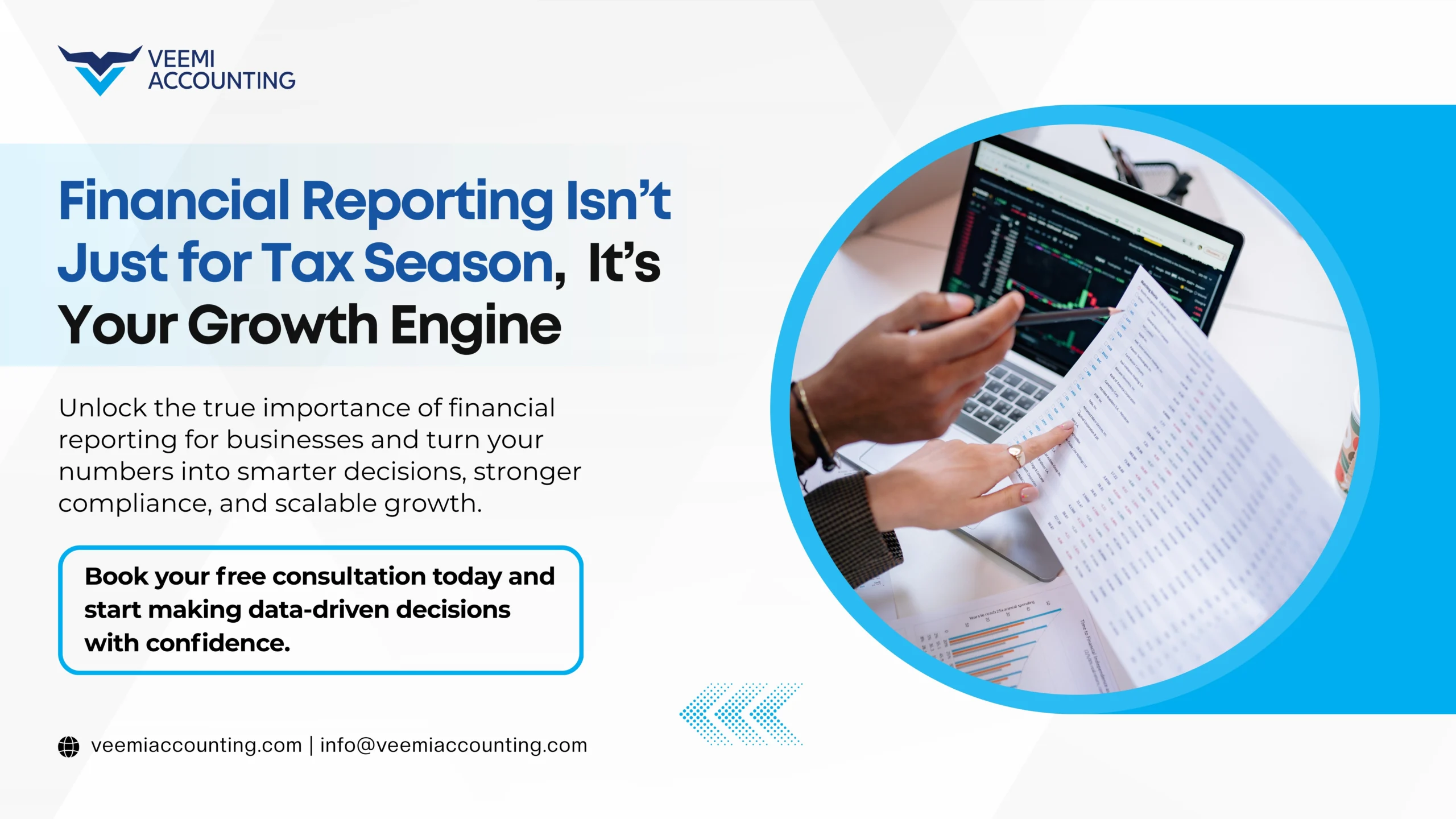
Many business owners believe financial reporting only matters when tax season rolls around. It’s often treated as a once-a-year task, something to complete, file, and forget. However, this mindset overlooks the real value financial reporting brings throughout the year. Understanding the importance of financial reporting for businesses goes far beyond annual tax filings. It’s a critical tool for decision-making, compliance, and long-term growth. In this blog, we will explore what financial reporting truly means, why it’s often misunderstood, and how it can transform the way businesses operate and scale.
Financial reporting is the process of preparing and presenting financial statements that reflect a company’s financial performance and position. These reports provide a structured view of how a business is performing over time.
The key financial statements include the Profit & Loss Statement, Balance Sheet, and Cash Flow Statement. Together, they tell the complete financial story of a business, from profitability to liquidity and overall stability.
Importantly, these reports are not just for tax purposes. They are governed by accounting standards such as US GAAP, IFRS, ASPE, and UK GAAP (FRS 102), ensuring consistency and accuracy across different regions. Financial reporting, at its core, is about clarity, transparency, and informed decision-making.
It’s common for businesses to focus on financial reporting only during year-end or tax season. This reactive approach often leads to rushed processes, last-minute adjustments, and overlooked errors.
When financial data is only reviewed annually, businesses operate for most of the year without a clear financial picture. This can result in poor decisions, missed opportunities, and compliance risks. The truth is, the importance of financial reporting for businesses lies in its ongoing value, not just its role in tax filings. Consistent, proactive reporting helps businesses stay informed, agile, and prepared.
Every major business decision, from hiring employees to expanding operations, depends on having accurate, up-to-date financial data. Financial reports transform raw numbers into clear insights that help business owners understand what’s working and what isn’t.
For instance, a cash flow statement doesn’t just show how much money is coming in; it highlights timing gaps, recurring expenses, and liquidity trends. This allows leaders to decide whether they can afford to hire, invest in marketing, or delay spending. Without reliable reporting, decisions are often based on assumptions, increasing the likelihood of costly missteps and missed opportunities.
Investors and lenders evaluate risk before committing capital, and financial reports are one of their primary decision-making tools. Clean, well-structured financial statements demonstrate that a business is financially disciplined, transparent, and capable of managing funds responsibly.
Beyond just numbers, consistent reporting reflects operational maturity. It shows that the business has systems in place to track performance and manage growth. For companies in the USA, Canada, Australia, and the UK, strong financial reporting can significantly improve access to funding, better loan terms, and long-term investor relationships.
Audits can happen unexpectedly, and being unprepared can create stress and potential financial risk. Businesses that maintain up-to-date financial records are always audit-ready.
Consistent financial reporting ensures that documentation is accurate, organized, and easily accessible. This not only simplifies the audit process but also reduces the risk of penalties, discrepancies, and compliance issues.
Businesses operating in multiple regions must adhere to various accounting standards and regulations. Inaccurate or inconsistent reporting can lead to serious consequences, including penalties and reputational damage.
Compliance with frameworks like IFRS, GAAP, ASPE, and FRS 102 requires precision and consistency. Regular financial reporting helps businesses stay aligned with these standards, ensuring smooth operations across jurisdictions.
Growth doesn’t happen by chance; it requires careful planning and reliable data. Financial reporting plays a key role in budgeting, forecasting, and tracking key performance indicators (KPIs).
With accurate financial insights, businesses can identify profit leaks, evaluate performance across departments, and uncover new growth opportunities. Without proper reporting, strategic planning becomes guesswork, limiting a company’s potential to scale effectively.
Financial reports not only support planning but also help businesses turn historical data into forward-looking strategies. If you want to go deeper into this, explore our guide on how to use tax season data to improve your financial strategy and unlock actionable insights from your numbers.
Neglecting financial reporting can lead to significant challenges. Businesses may face unexpected cash flow shortages, miss important compliance deadlines, or struggle to gain investor confidence.
Without accurate financial data, companies risk overspending, underpricing their services, and failing to detect financial issues early. In many cases, businesses only recognize gaps in their reporting when problems become severe, making them harder and more costly to fix.
Neglected financial reporting often goes hand-in-hand with disorganized bookkeeping, which can create delays and compliance issues. As explained in our blog on how poor bookkeeping delays tax filing for businesses, even small gaps in records can lead to missed deadlines and costly disruptions.
The importance of financial reporting for businesses goes far beyond tax deadlines; it’s the backbone of smarter decisions, stronger compliance, and sustainable growth. When your financials are accurate and up to date, you are not just reacting to numbers; you are using them to lead your business forward with confidence.
If you are ready to take control of your financial reporting and use it as a strategic advantage, now is the time to act.
Schedule a free 30-minute consultation today.
Let’s turn your financial data into clear, actionable insights for growth.
Ideally, businesses should prepare financial reports monthly. Monthly reporting provides timely insights into performance, cash flow, and expenses, allowing business owners to make quick adjustments. Waiting until year-end limits visibility and reduces the ability to respond proactively to financial trends.
Financial reporting focuses on standardized financial statements, such as the Profit & Loss Statement, Balance Sheet, and Cash Flow Statement, which are often used for compliance and external reporting. Management reporting, on the other hand, is more customized and includes detailed insights, KPIs, and analysis tailored for internal decision-making and strategy.
Yes, significantly. Inconsistent or inaccurate financial reports can lower investor confidence and make it difficult to justify your business’s true value. Buyers and investors rely heavily on clean, well-structured financials to assess risk, profitability, and growth potential during due diligence.
Regular financial reporting, especially through cash flow statements, highlights patterns in inflows and outflows. This helps businesses spot delays in receivables, rising expenses, or seasonal fluctuations early, allowing them to take corrective action before they turn into a cash crunch.
Absolutely. Even small businesses benefit from consistent financial reporting, as it builds financial discipline early on. It helps founders understand their cost structure, pricing strategy, and profitability, while also preparing them for future funding, scaling, or compliance requirements.
Book a free consultation and let's talk about what your firm or business needs.
Outsourced accounting, bookkeeping, tax, FP&A, and fractional CFO services for USA, Canada, Australia, and UK.
WhatsApp us