Why US Businesses Switch to Outsourced Accounting During Tax Season
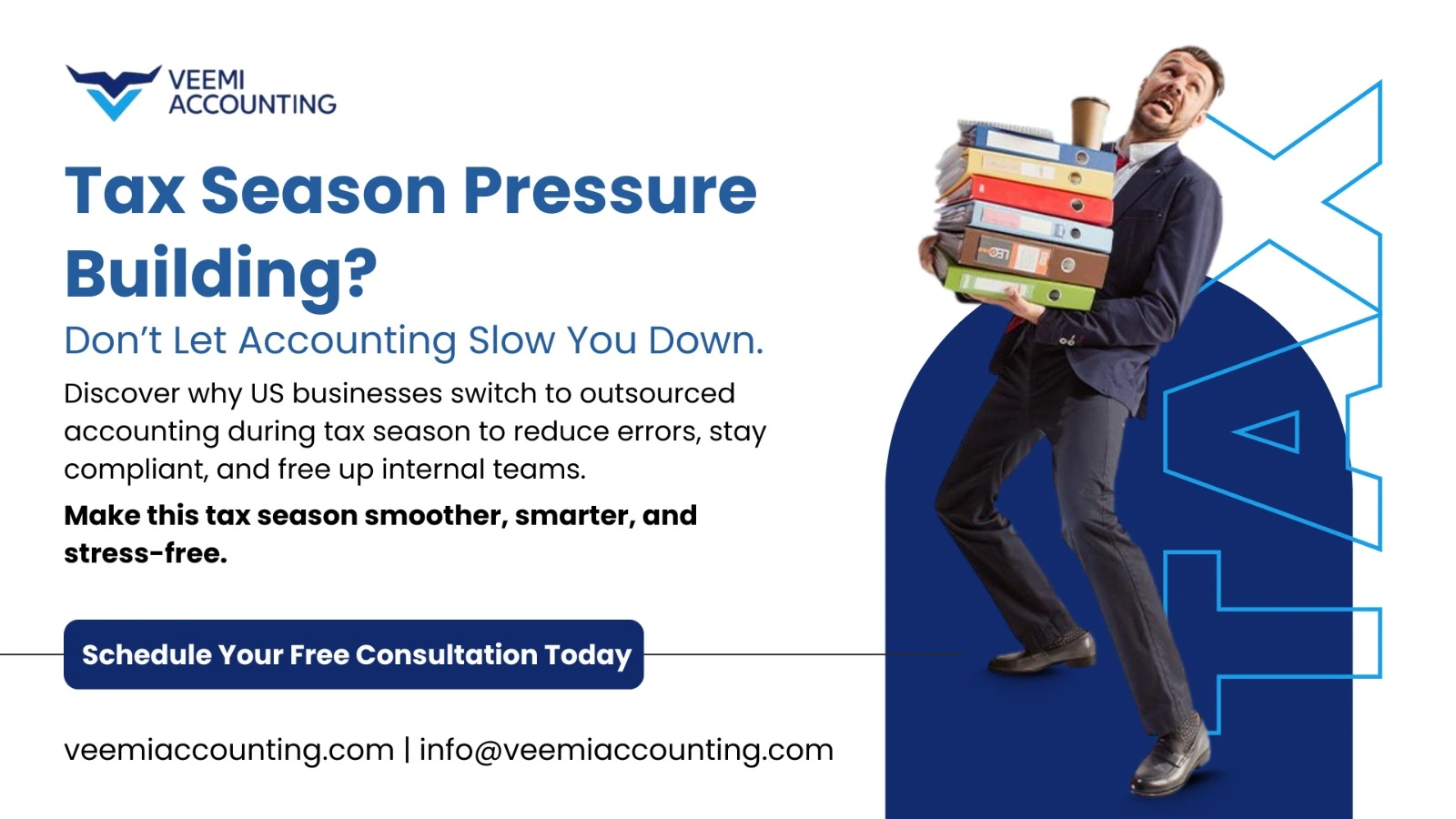
As tax season approaches, businesses across the United States feel the pressure mount. Deadlines tighten. Financial reports must be accurate. Compliance requirements grow more complex. Internal teams often juggle year-end reconciliations while handling daily operations, creating a perfect storm of stress and risk.
In recent years, more US businesses have started outsourcing their accounting functions, particularly during Q1. The shift is no coincidence.
What’s driving companies to make this move at precisely the moment it matters most?
The answer lies in efficiency, expertise, and the growing realization that tax season demands more than basic bookkeeping.
The Tax Season Pain Points Businesses Face In-House
1. Overloaded Internal Teams and Burnout
During tax season, finance teams face reporting deadlines, reconciliations, tax filings, and compliance checks, often simultaneously. For small and mid-sized businesses, a lean accounting team can quickly become overwhelmed.
Burnout does not just affect morale; it increases the likelihood of mistakes.
2. Errors Due to Rushed Filings
When filings are rushed, accuracy suffers. Missing deductions, classification errors, incorrect payroll tax entries, or incomplete documentation can trigger penalties or audits.
Tax filings are not forgiving. Even minor mistakes can result in costly consequences.
3. Keeping Up With Ever-Changing Tax Laws
Federal and state tax regulations frequently change. Staying compliant requires ongoing monitoring, interpretation, and implementation. For internal teams already stretched thin, this becomes difficult.
4. The Cost of Seasonal Hiring
Hiring temporary staff or additional accountants during peak season sounds practical, but it comes with recruitment costs, onboarding time, and salary overhead. And once tax season ends, that added cost often becomes unnecessary.
What Outsourced Accounting Actually Covers During Tax Season
Many business owners assume outsourcing only means bookkeeping. In reality, outsourced accounting during tax season includes comprehensive support:
Bookkeeping Clean-Up and Reconciliation
Before filing taxes, books must be clean and accurate. This includes:
- Bank and credit card reconciliations
- Accounts payable and receivable adjustments
- Expense categorization corrections
- Financial statement preparation
If your records are not fully reconciled yet, learn why it’s critical to clean books before tax filing and how starting early prevents last-minute compliance risks.
Tax Preparation Services
Outsourced firms handle filings for:
- Sole proprietors
- LLCs
- S-Corps
- C-Corps
- Trust returns
Professionals ensure compliance with IRS regulations and state requirements.
Payroll Tax Compliance
Payroll taxes are a major audit trigger. Outsourced teams ensure:
- Accurate payroll reporting
- Timely federal and state tax deposits
- Proper documentation and filings
Financial Reporting and Documentation Readiness
Tax season requires more than just filing returns. Businesses must prepare profit & loss statements, balance sheets, cash flow reports, and supporting documentation.
With outsourced accounting, everything is prepared systematically and audit-ready.
Top Reasons Businesses Make the Switch
1. Cost Efficiency
Outsourcing allows businesses to pay for expertise without the overhead of full-time salaries, benefits, and training costs. You gain access to experienced professionals only when you need them.
2. Access to Specialized Knowledge
Outsourced firms provide access to CPAs and tax professionals who specialize in complex tax structures, compliance updates, and industry-specific regulations.
3. Scalability
Tax season creates workload spikes. Outsourced services scale up during peak demand and scale back afterward, giving businesses flexibility that in-house teams often can’t match.
If you are still evaluating the long-term financial impact, read our detailed in-house vs outsourced bookkeeping comparison to understand which model delivers better ROI for US businesses.
4. Accuracy and Reduced Audit Risk
Experienced professionals conduct multiple levels of review. This reduces filing errors and minimizes the risk of triggering an IRS audit.
5. Time Back to Focus on Core Business
When leadership is not buried in spreadsheets and tax documentation, they can focus on growth, operations, and strategy.
Common Misconceptions About Outsourcing Accounting
“It is Only for Large Corporations.”
Not true. In fact, small and mid-sized businesses benefit the most from outsourcing because they lack large internal finance departments.
“I will Lose Control of My Finances.”
Modern accounting platforms allow real-time reporting and dashboard visibility. Business owners maintain full transparency and control.
“It is Too Expensive.”
When compared to the cost of penalties, audits, rushed mistakes, and seasonal hiring, outsourced accounting is often more cost-effective.
When Is the Right Time to Make the Switch?
Signs Your Business Has Outgrown Its Setup
- Repeated tax filing stress
- Frequent bookkeeping corrections
- Missed deadlines
- Rising compliance complexity
- Increased revenue and transaction volume
Why Switching Before Tax Season Is Ideal
Transitioning before Q1 allows time for proper onboarding, clean-up, and system integration. Waiting until deadlines are near limits the effectiveness of the switch.
How Veemi Accounting Makes Onboarding Seamless
With structured onboarding, secure data migration, and experienced professionals, Veemi Accounting ensures minimal disruption and faster transition, even during peak season.
Why Choose Veemi Accounting
Industry-Specific Expertise
Veemi Accounting supports businesses across multiple sectors, understanding industry-specific deductions, compliance requirements, and reporting standards.
Proficiency in Leading Accounting Tools
Experienced in platforms like:
This ensures seamless integration with your current systems.
US-Focused Compliance and GAAP Standards
Strict adherence to US tax regulations and Generally Accepted Accounting Principles ensures accurate financial reporting and compliance.
Dedicated Team and Transparent Reporting
Clients receive consistent communication, structured reporting, and proactive tax planning, not just reactive filing.
Turn Tax Season Into a Strategic Advantage
Tax season does not have to mean chaos, stress, and costly mistakes.
More US businesses are switching to outsourced accounting because they recognize the value of expertise, scalability, and peace of mind, especially during high-pressure periods. With the right support system in place, tax season becomes less about scrambling to meet deadlines and more about strategic financial planning.
Instead of reacting to compliance pressure, position your business to operate confidently and efficiently.
Ready to Make the Switch?
Take the first step toward a smoother, more organized tax season.
Schedule Your Free 30-Minute Consultation Call Today.